You’ve got a script. Maybe it’s been sitting in a folder for six months. Maybe you just finished it last week and you’re itching to see your characters drawn for real instead of just in your head. Either way, you’re now staring down the actual hard part — figuring out how to hire a comic book artist in 2026 without getting burned, overcharged, or left with half a finished issue and a freelancer who’s gone quiet on Discord.
Nobody really teaches this. I’ve watched creators learn it the expensive way — paying upfront, getting three pages back, and then chasing someone for two months who clearly isn’t coming back. So here’s the version of this conversation I wish more people had before they sent that first payment. Not a recycled “top 10 tips” list. Just what actually matters.
Why The Art Decides Whether Anyone Reads Page Two
Here’s something that took me a while to really internalize: readers judge a comic by its art before they’ve processed a single word of dialogue. You can have the tightest script in the indie scene, but if the artist can’t keep your lead character looking like the same person from page 3 to page 14, people notice. Fast. Comics are a visual medium first and a literary one second, whether or not that feels fair to writers.
That stakes the bar higher for indie comic creators specifically. You’re probably not backed by a publisher’s art department or a six-figure production budget. You’ve got a Kickstarter goal, maybe a Patreon tier you’re trying to hit, and a story you care about way too much to watch it get botched by the wrong hire. There usually isn’t a do-over here — you get one shot at this project landing the way you pictured it.
Start By Figuring Out What You’re Actually Hiring For
This is where most first-time creators trip up. They search “comic book artist” and assume one person handles everything. Sometimes that’s true. Often it isn’t.
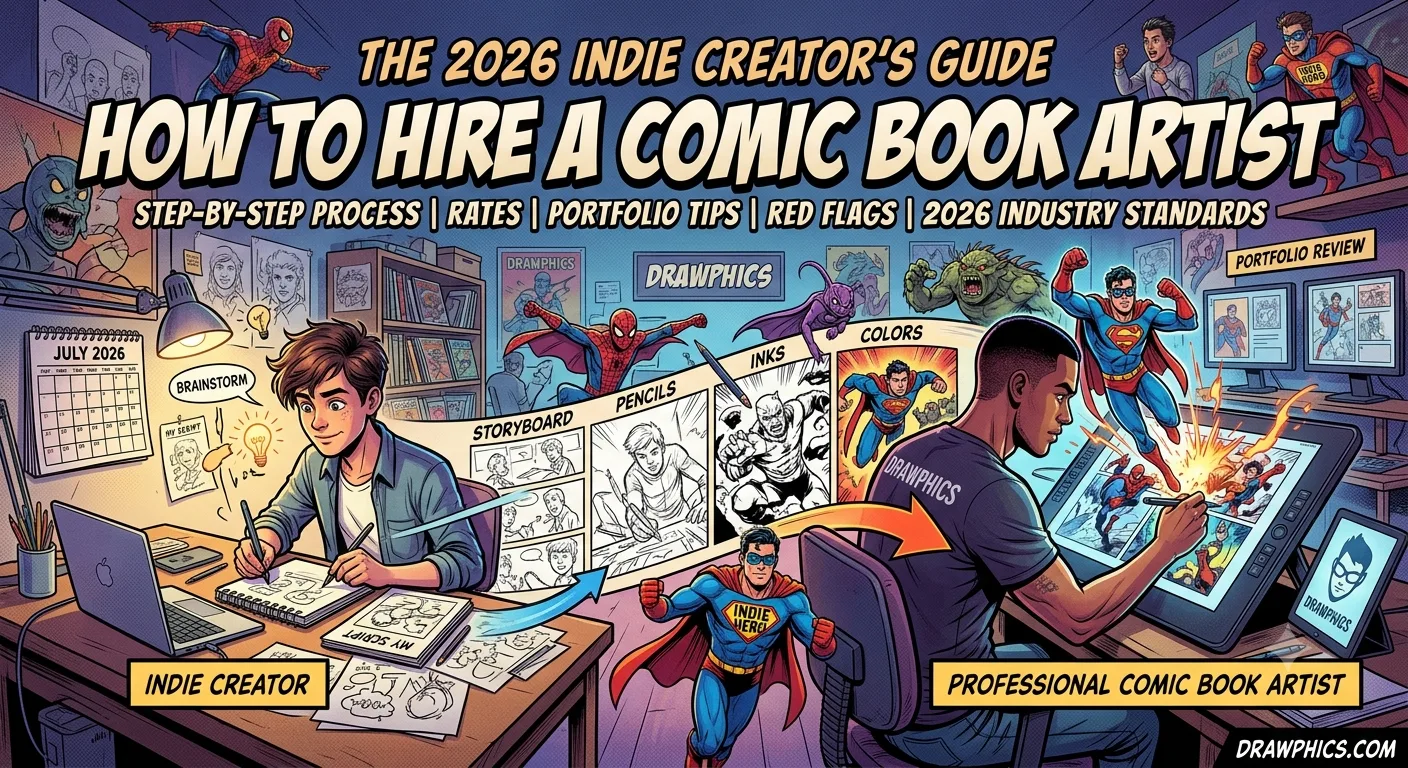
Comic production splits into distinct roles: a penciler who builds the raw figures and layout, an inker who locks in the bold final linework, a colorist who handles mood and atmosphere, a letterer who places your dialogue and sound effects, and frequently a separate cover artist entirely. Some working artists handle pencils, inking, and coloring as one package, which simplifies things considerably if you’re managing this solo. Others specialize in a single stage and operate as part of a team. Neither setup is objectively better — it really comes down to your timeline and how much control you want over each step.
One thing worth doing early, before any pages get drawn: lock down your cast. If your book leans into a specific visual mood — moody noir, bright all-ages adventure, something grittier — this is the moment to invest in character design and concept art. I’ve seen creators skip this step to save money upfront, then end up paying for redraws across a dozen pages once they realize the hero’s jacket looked wrong the whole time. It’s a false economy almost every time.
What This Is Actually Going To Cost You
Let’s just address it directly, because everyone’s wondering: how much does it cost to hire a comic book artist? There’s no single clean answer — pricing depends heavily on the artist’s experience, how detailed your panels are, and how many production stages you’re paying for at once.
That said, here’s roughly where comic book page rates tend to land in the U.S. market right now.
| Service Stage | Typical Range (Per Page) |
| Pencils only | $50 – $150 |
| Inks only | $40 – $120 |
| Full pencils + inks | $100 – $250 |
| Coloring | $50 – $150 |
| Full color (pencils, inks, color) | $150 – $400+ |
| Lettering | $10 – $40 |
| Cover art (single illustration) | $150 – $600+ |
A six-panel fight scene with three characters and a detailed background is never going to cost the same as a two-panel quiet conversation between two people in a kitchen. That’s just the reality of how labor-intensive comic pages are. And studio-based comic book illustration cost estimates often fold revisions and project oversight into the quote, where solo freelancers may bill those separately — worth asking about before you assume you’re comparing apples to apples.
My honest advice: don’t anchor on a per-page number you saw on a forum somewhere. Send your actual script over and ask for a project quote. Anyone who’s been doing this a while can scope real panel density and give you a number that reflects your book specifically, not a guess.
Looking At A Portfolio The Right Way
A pretty Instagram grid tells you almost nothing useful. When you’re reviewing a comic artist portfolio, the single “hero shot” pieces are the least important part. What you actually want is sequential work — several pages from one continuous story, ideally with the same characters appearing more than once.
Pay attention to whether the character looks like the same person on page one and page twelve. Watch whether you can follow the action across panels without needing a caption to explain what just happened. Check whether the artist can handle a quiet emotional beat as convincingly as a high-energy fight. And look for finished, inked, colored work — not just loose sketches that look impressive but were never carried through to completion.
If a portfolio is almost entirely single illustrations with no real sequential storytelling, that’s worth asking about directly before you commit. Drawing one striking standalone image and drawing twenty-two consistent pages back to back are genuinely different muscles, and not every talented illustrator has built the second one.
How A Comic Page Actually Gets Made
Understanding the comic book production process end to end does two things: it sets realistic expectations, and it lets you catch problems before they get expensive to fix.
It typically runs in this order. First, script breakdown — the artist reads your script and translates it into panel-by-panel beats. Then thumbnails, which are rough, small sketches mapping out composition and pacing before anyone commits real time to a page. From there, full pencils — detailed line drawings built on the approved thumbnails. Then inks, the clean bold linework that defines the finished look. Then colors, starting with flats and building up through shading and light. Then lettering, placing dialogue and sound effects in their final position. And finally, export — delivery of print-ready files at the correct resolution and bleed specs for whatever you’re publishing to.
Each of those stages should come with a checkpoint where you actually see the work and can give feedback. If an artist jumps from rough pencils straight to a “finished” page with zero opportunity for you to weigh in between, that’s not efficiency — that’s a corner being cut, and it usually shows.
Get Your Script Layout In Order First
Artists move faster and more accurately when your comic book script layout is actually readable. You don’t need to format it like a Marvel house style sheet, but at a minimum it should include page and panel numbers, a clear description of what’s happening in each panel, dialogue and captions clearly attributed to the right character, and any specific visual notes — camera angle, mood, lighting cues, whatever matters to the scene.
A vague or messy script almost always leads to more revision rounds. More revision rounds mean slower delivery and, frequently, higher costs once you’ve blown past the included revision limit. Tightening this up before you ever message an artist is one of the cheapest things you can do to keep your project on schedule.
Freelancer Or Studio? Here’s How I’d Think About It
Both can absolutely work. It comes down to what your project actually needs.
A freelancer is often more affordable for a single issue or a short story, and you get a direct one-on-one relationship with the person drawing your book. The risk is real, though — if they get sick, get overbooked with other clients, or simply vanish (and yes, this happens more than the industry likes to admit), your whole project stalls with no backup plan.
A studio setup — the kind of dedicated illustrator services team that manages multiple artists under one roof — tends to offer more reliability, because there’s coverage if one person is out, and the pipeline from character design through final print-ready delivery often lives in one place instead of being stitched together across three different freelancers. That matters a lot more for graphic novel illustration projects running well past a single issue, where keeping visual consistency across sixty or eighty pages is genuinely hard to pull off without a system behind it.
If you’re working on something longer than one issue, ask directly how they maintain consistency across that many pages. Character model sheets should come up in that answer without you having to prompt for it. If it doesn’t, that’s a sign they haven’t thought about it much.
Questions Worth Asking Before You Pay Anyone
Before committing to any professional comic book artist, there’s a short list of things worth nailing down. What exactly is included in the quote — pencils only, or the full package through color and lettering? How many revision rounds come included before extra charges kick in? What’s the realistic turnaround per page, not the best-case scenario? Will you receive actual print-ready files at the resolution and format your printer or platform needs? Who owns the finished artwork and usage rights once the project’s paid in full? And can you see something in writing before any money changes hands?
A serious artist or studio answers all of this without flinching. Vague answers, deflection, or refusal to put terms in writing is about as clear a warning sign as you’ll get in this business.
Mistakes I See Indie Creators Make Over And Over
Hiring purely on the lowest price tag is probably the most common one — and it usually backfires, because the cheapest quote tends to come with the most revisions, the slowest turnaround, or both. Skipping a written agreement is another big one; verbal handshake deals fall apart constantly, and getting scope, pricing, and rights written down protects everyone involved. Not asking about file formats trips people up too — print and digital publishing need genuinely different specs, and finding that out after delivery is a painful conversation. Ignoring genre fit is another quiet killer: a gorgeous portfolio in the wrong style is still the wrong artist for your story, no matter how talented they are. And underestimating the timeline rounds it out — a full 22-page color issue done properly takes weeks, not days, and any quote promising otherwise deserves a second look.
Where Drawphics Fits Into This
If you’d rather skip the trial-and-error version of this process, our team handles dedicated comic book illustration services covering everything from panel layout through final color. We also work on character design and concept art if you need your cast locked in before pages go into production, plus book cover design for a cover that actually matches the tone inside.
You can look through real, completed sequential pages in our portfolio, get a better sense of how we run projects on the what we do page, or check common questions on our FAQs page. When you’re ready to talk specifics — script, budget, timeline — just reach out to our team and we’ll walk through it with you directly.
Bottom Line
Figuring out how to hire a comic book artist really isn’t about chasing the single “best” name in the indie scene — it’s about finding the right fit for your story, your budget, and the timeline you’re actually working with. Tighten your script, know your real numbers, look for sequential consistency in a portfolio rather than just a pretty single image, and ask the direct questions before any money moves. Get that right, and your 2026 comic starts on solid footing instead of a gamble.
FAQs
1. How much does it cost to hire a comic book artist?
Costs usually range from $50 to $400+ per page depending on whether you need pencils only, full inking, or complete color work.
2. How do I know if an artist’s portfolio is strong enough?
Look for sequential, multi-page samples showing consistent characters and clear panel flow, not just standalone illustrations.
3. Should I hire a freelancer or a studio for my comic?
Freelancers suit short, budget-friendly projects; studios offer more reliability and consistency for longer graphic novels.
4. What should my comic script include before I hire an artist?
Panel numbers, clear scene descriptions, attributed dialogue, and key visual notes speed up production and cut revisions.
5. What’s included in the comic book production process?
Script breakdown, thumbnails, pencils, inks, coloring, lettering, and final export into print-ready files for publishing.