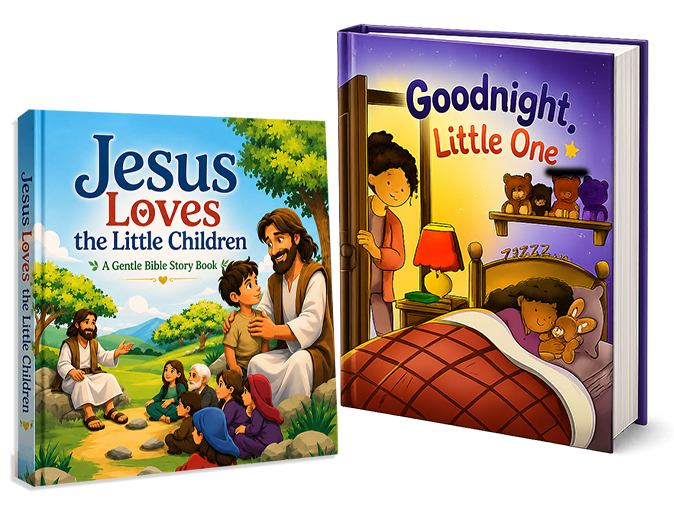
You’ve got a children’s book manuscript sitting on your computer. The story’s good. You know it is. But there’s one problem, you need pictures. And you have no clue where to start looking for children’s book illustrator. I’ve watched authors go through this. Some find their perfect match quickly. Others waste months and end up with artwork that completely misses the mark. The difference usually comes down to knowing what you’re looking for before you start scrolling through portfolios. Let’s explore this in detail.
Know What Your Book Actually Needs First
Don’t start browsing portfolios yet. I know you want to. But trust me, you need to figure out a few things about your own book before you look at anyone’s work.
Who Are You Writing For?
This seems obvious, but you’d be surprised how many authors skip it.
| Age group | Their Requirements | Visual Approach |
| Board books (0-3) | Bright, simple, high contrast illustrations | Bold shapes, clear images, minimal details |
| Picture books (4-6) | Full spread colors, expressive face characters | Illustration carry half the narrative responsibility |
| Early readers (6-8) | More Text, fewer illustration work | Spot art, simple drawings, chapter headings |
| Middle grades (8-12 ) | Black & white line art | Mostly full page illustrations |
So before you search for a children’s book illustrator, figure out who you’re talking to. It’ll save you from looking at the wrong portfolios.
How Much Work Should Your Pictures Do?
Here’s a question most authors don’t ask themselves early enough.
- Does your story need illustrations to make sense?
– Or do the pictures just set the mood?
– If your book relies on visual humor, you need someone who understands storytelling through images.
– If your book works fine without pictures, you have more room to experiment.
I once worked with an author who didn’t think about this until after hiring an illustrator. They’d approved all the artwork, then realized the illustrations didn’t actually support the story’s structure. The whole project had to be redone. It was expensive. It was frustrating. And it was completely avoidable.
Don’t make that mistake.
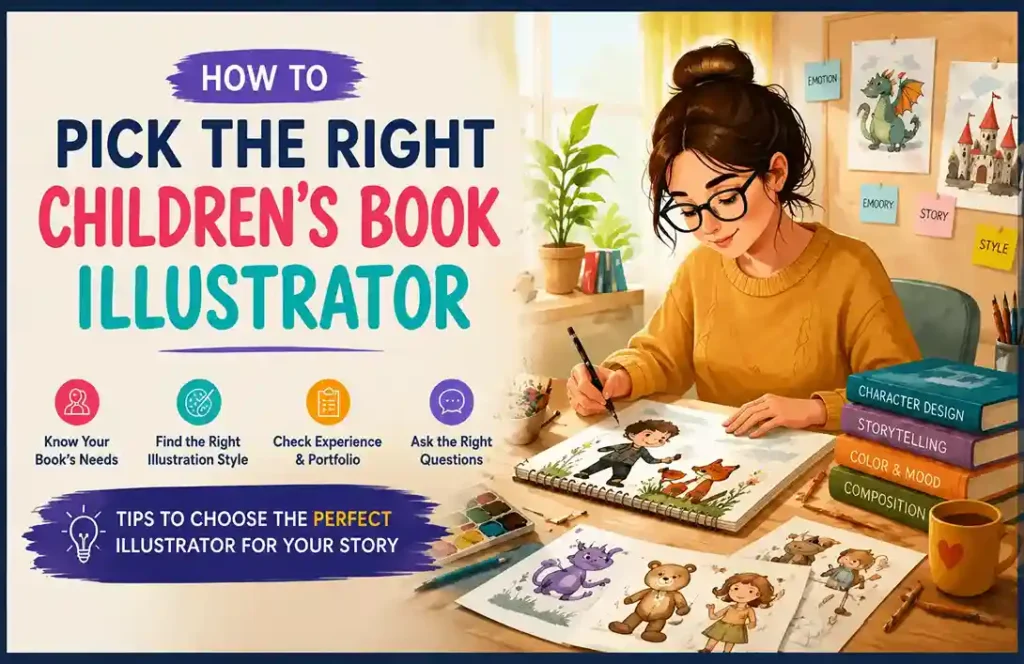
How to choose a Children’s book illustrator by Finding the Right Style
Every children’s book has its own visual perception that suits their personality. Make sure the style you choose needs to match the emotional tone of your story
Popular Styles You’ll See
The Gruffalo use big expressions and exaggerated features. They’re perfect for funny books or adventures.
Watercolor styles feel soft and emotional. Great for family stories or gentle tales.
Line art is minimalist with lots of white space. Early readers love this. Vintage styles look old fashioned in the best way. Think Beatrix Potter.
Bold and flat styles use solid colors and clean lines. Feels modern and fresh.
Manga styles have big eyes and dynamic angles. Works for adventure or magical stories. Each style has its place. The trick is matching it to your story’s personality.
One Mistake Authors Keep Making
They look at one amazing illustration and decide right there. “This is my illustrator!” Terrible idea! You need to see a whole book. Not one piece. Can the illustrator keep up that quality for thirty-two pages? Can the characters look consistent from start to finish? That’s what matters. I always tell authors to ask for a complete book sample. If the illustrator doesn’t have one, or hesitates to share it, that’s a warning sign.
Start a mood board. Save images that feel right for your story. After a few days, you’ll notice patterns. And those patterns will point you toward the right children’s book illustrator.
Where to find a Children’s book illustrator
Fiverr and Upwork
These sites are solid for first-time authors. You can see reviews, prices, and portfolios all in one place. There’s payment protection too, which is nice. Quality varies a lot, though. In Fiverr and Upwork, some illustrators are brilliant. Others are clearly still learning. You’ve got to do your research. Drawphics is one of those profiles that stands out. Their team has done plenty of children’s books. People keep mentioning their attention to detail and how easy they are to work with. If you want a reliable children’s book illustrator, they’re worth a look.
Behance and Instagram
These platforms have gorgeous work. Search for #childrensbookillustrator or picturebookart. You’ll find artists you’d never see otherwise.
Facebook Groups and Reddit
Honestly, this is my go to recommendation. Other authors have already done the work for you. They’ll tell you exactly who they hired, how much it cost, and whether they’d do it again. That’s gold. Joinr/selfpublish on Reddit. Look for children’s book groups on Facebook. People love sharing their experiences.
What Really Matters When Choosing
Consistency
This is number one. No question. Look at several projects from the same illustrator. Does the quality stay consistent? Or does one book look completely different from the next? If the style jumps around, that’s a problem. A good children’s book illustrator should have a recognizable approach.
Book Experience
Being a great artist doesn’t automatically make you a great book illustrator. Books have layouts. Text has to sit somewhere. There’s bleed and trim to think about. Someone who does editorial work might not understand how to pace a thirty-two page book. Ask about their experience with actual books.
Communication
You’ll be working together for weeks, maybe months. If they’re hard to reach or dismissive, you’ll hate every minute of it. The best illustrators ask good questions. They want to get your vision right. They offer suggestions that improve your story. They’re partners, not just vendors.
Questions to Ask Before You Commit
- Can I see a full book you’ve illustrated?
- How long will mine take? Walk me through how revisions work.
- What file formats do you provide? Who owns the rights to the artwork?
- Have you worked with Amazon KDP? How do you like to communicate?
- What happens if I don’t like the sketches? Can I speak to a past client?
- Ask all of these. Seriously. Each one prevents problems later.
The Thing Everyone Worries About
Inconsistent art You get your printed book. You flip through it. Your main character looks different on every page. Hair changes. Nose shape shifts. Colors don’t match. It happens more than you’d think.
Usually because the illustrator didn’t have a clear reference. Or they used AI generated pieces that don’t work together.
How to Stop It Before It Starts
- Create a character style sheet.
- Write down every detail about your characters. Hair color. Eye shape. Height.
- How they stand. What they look like happy, sad, angry.
- Give this to your children’s book illustrator before they start drawing.
- Ask for a test sketch. One character. One scene.
- If it works, move forward. If it doesn’t, fix it now. Not after the whole book is finished.
- Agree on the style upfront. You can’t change direction halfway through.
What Drawphics Does
Their team builds a character guide before any final art gets made. Every detail is documented and shared with you. That way, everything stays consistent from page one to page thirty-two.
Money Stuff
Typical Costs
New illustrators: $50 to $150 per picture.
Experienced freelancers: $200 to $500.
Top professionals: $500 to $1,000 or more.
A full thirty-two page book runs anywhere from $1,000 to $15,000. Learn more about children’s book illustration cost before planning your budget.
Who Owns the Artwork
Work-for-Hire means you own everything. You can print posters, adapt into animation, do whatever you want. Licensing means the illustrator keeps the rights. You just pay to use the images in your book.
For self-publishing, Work-for-Hire is simpler. But talk about this before you start.
How Revisions Usually Work
First come sketches. Rough drawings to get the composition right. You give big picture feedback.
Then clean drawings. Refined line art where you review expressions and poses. This is when most feedback happens. Fix things now, not later.
Then color. Final art with shading and details. Changes are possible but limited. Approve color palettes early.
Most illustrators offer two to three revision rounds. Extra rounds may cost more.
Why Drawphics Is Worth a Look
I don’t usually recommend specific studios. But Drawphics stands out.
“I had the pleasure of working with Sehar on a recent illustration project, and the experience was excellent from start to finish.”
“Absolutely wonderful to work with! Very attentive to detail and her response time is excellent.”
“Sehar created a set of vibrant personality-filled illustrations for our children’s book.”
They handle everything from character design to print-ready files. They’ve done Amazon KDP work before.
Quick FAQ
- Where do I find a children’s book illustrator near me?
You don’t have to. Most work remotely. - How much does it cost? $50 to $500+ per illustration?
Full book: $1,000 to $15,000+. - How long does it take?
Four to eight weeks. - When should I hire someone?
After your manuscript is finished. - What if I hate the sketches?
Give feedback. Most contracts let you cancel during the sketch phase. - How do they understand my vision?
Create a brief with character details, mood boards, and examples. - Work-for-Hire vs licensing?
Work-for-Hire means you own it. Licensing means the illustrator does. - How many revisions?
Usually two to three rounds. - What files for Amazon KDP?
High-resolution PDF for interior. High-resolution JPG for cover. - How to avoid inconsistent art?
Character sheets. Test sketches. Agree on style early.
Ready to Start?
Finding the right children’s book illustrator takes effort. But it’s worth every minute. The right partner makes your story unforgettable.