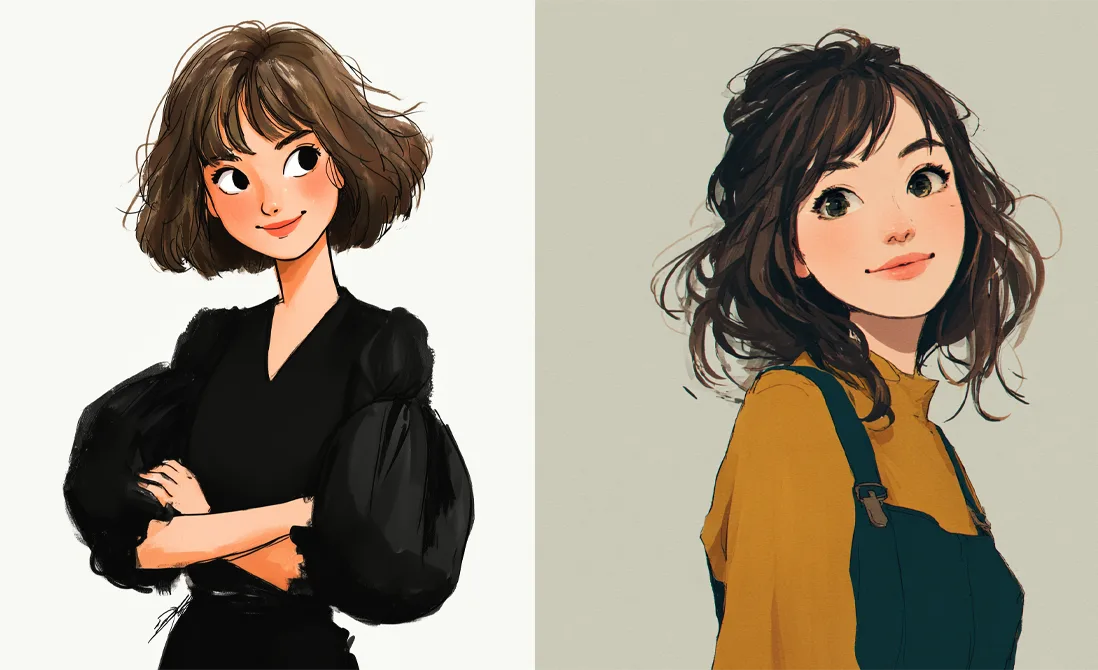
Book Illustration Copyright: Who Owns the Art in Your Book?
You’ve probably heard that copyright protection is automatic. That part is true. The moment you write a story or finish an illustration, it’s protected. But here’s what most authors miss: the text and the artwork are protected separately. You own your words. The illustrator owns their images.
And paying for those images doesn’t change that.
Unless you have a signed agreement transferring rights, the illustrator keeps the copyright. That means you can’t assume you have permission to reprint, adapt, or sell those illustrations beyond the original book.
This guide walks you through book illustration copyright, what it covers, how licenses and assignments work, what work-for-hire actually means, and the contract clauses you can’t afford to skip.
Who Owns the Illustrations in a Children’s Book?
This question causes more confusion than almost anything else in children’s publishing. When the art carries as much weight as the story, knowing who owns what becomes critical. Several common arrangements exist:
The book illustration copyright and license work.
The illustrator keeps ownership but allows the author or publisher to use the artwork in specific ways, printing it in the book, distributing it, and sometimes using it in marketing. In many countries, this is the default setup for commissioned work unless a contract says otherwise.
The illustrator assigns copyright to the author or publisher.
Ownership transfers outright, usually for a fee. The author becomes the copyright holder of the artwork from that point forward.
A valid work-for-hire arrangement applies.
In the US, work-for-hire has a strict legal definition. It doesn’t apply just because you call it that in an email. It generally requires either an employment relationship or a written agreement that fits narrow statutory categories. Many freelance illustration jobs don’t qualify unless the paperwork is done correctly.
Employee-created illustrations.
If an illustrator works as an employee of a publisher rather than as a freelancer, the employer typically owns what they create within the scope of their job, subject to local employment and copyright laws.
Does Paying an Illustrator Give You Copyright?
No. And this misunderstanding catches a lot of authors off guard.
When you pay for a commission, you’re generally buying the physical or digital files and, depending on your agreement, a license to use them. That’s it. Payment alone doesn’t transfer copyright ownership to you.
For copyright to transfer, it must be either assigned in writing or covered by a work-for-hire arrangement that genuinely meets the legal requirements where you live.
Copyright Ownership vs Illustration License
Understanding the difference between owning copyright and holding a license is one of the most valuable things you can learn as an author.
Copyright ownership gives you the underlying legal right to the work. You can license it to others, modify it, and control its future use.
A licence, by contrast, is simply permission to use someone else’s copyrighted work within specific boundaries. The illustrator keeps ownership. The author gets defined usage rights.
A licence can be broad enough to cover just about everything you need without copyright ever changing hands. Typical terms in an illustration licence include:
- print books and ebooks
- worldwide or territory-specific distribution
- translations and foreign editions
- marketing and promotional use
- website and social media use
- advertising
- sequels and character reuse
- merchandise
- animation, film, or app adaptations
- other derivative works
An exclusive licence means you’re the only one who can use the artwork in the agreed ways, even though the illustrator still owns the copyright. A non-exclusive licence means the illustrator can grant similar rights to others too.
Book illustration copyright assignment and Work-for-Hire
Copyright assignment is the formal transfer of ownership from one person to another. It’s documented in writing and signed by the person giving up their rights. In many jurisdictions, an assignment must be explicit. Silence or a casual email doesn’t reliably transfer copyright.
Work-for-hire is a different legal route, and it doesn’t operate the same way everywhere.
In the US, it’s defined by statute and applies only to certain categories of commissioned work with a signed agreement stating the work is “for hire,” or to work created by an actual employee.
Under UK rules, the concept works differently, and freelance commissions typically need an explicit assignment to shift ownership.
What an Illustrator Contract Should Say About Copyright
A written agreement with your illustrator prevents most future disputes. Many authors handle this by working with an established illustration studio like Drawphics, where contracts and rights terms are already built into the commissioning process. At minimum, it should address these points:
- who owns copyright in the finished artwork
- whether you receive a licence or an assignment
- exclusive or non-exclusive rights
- territory and duration of the licence
- print and digital formats included
- commercial and marketing use
- whether characters can be reused in sequels
- merchandising rights
- adaptation rights
- whether you can modify the art
- who keeps the original source files
- whether the illustrator can display the work in a portfolio
- credit requirements
- payment structure and royalties
- what happens if the project is cancelled
| Arrangement | Who owns copyright? | What can the author do? | Best suited for |
|---|---|---|---|
| Illustrator retains copyright + licence | Illustrator | Use artwork within the agreed scope | Most trade and self-published picture books |
| Exclusive licence | Illustrator | Sole use within agreed terms; illustrator can’t license elsewhere | Authors needing broad control without full ownership |
| Copyright assignment | Author or publisher | Full control, including future licensing | Publishers building a franchise or IP-heavy series |
| Valid work-for-hire | Author or publisher (by law) | Same as full ownership, if arrangement qualifies | Employer-employee or narrow commissioned categories |
Text and Book Illustration Copyright in a Children’s Book
A children’s book typically contains at least two separately protected creative works: the manuscript and the illustrations.
The author usually owns the text. The illustrator usually owns the artwork unless it’s been licensed or assigned.
A publisher, if one is involved, may hold specific publishing rights granted by both the author and the illustrator under separate contracts.
None of these parties automatically controls what the others created. Each right comes from its own agreement.
How to Copyright Illustrations in a Book
Copyright registration and copyright ownership aren’t the same thing. Ownership exists automatically once original work is created in countries that follow this rule.
Registration is a separate, optional step that can offer additional legal benefits. In the US, for example, you generally need to register before filing an infringement lawsuit, and the U.S. Copyright Office outlines the current process, fees, and requirements. Registration can also affect the damages you can claim.
Copyright Notices Inside Illustrated Books
Many illustrated books include a copyright page that separates the two creative contributions. You’ll often see something like “Text copyright © [author]” and “Illustrations copyright © [illustrator],” each with the relevant year.
Can Old Book Illustrations Copyright Be Reused?
“Old” and “public domain” aren’t the same thing. Whether an illustration has entered the public domain depends on the copyright term in the relevant country, which is often tied to how long ago the creator died or when the work was published. Those rules vary.
A specific edition, scan, or restoration of an old illustration can also carry its own separate rights if meaningful creative work went into producing that particular version.
Copyright-Free and Public-Domain Illustrations
“Free to download” and “free to use commercially” are two very different things. Mixing them up is a common mistake in self-publishing.
A public-domain illustration can generally be used freely because copyright has expired or never applied. Stock illustrations and Creative Commons images usually come with licence terms that specify whether commercial use is allowed, whether attribution is required, and whether modification is permitted.
Photoshop, Editing, and Derivative Illustration Rights
Editing, cropping, recolouring, compositing, or heavily modifying someone else’s illustration doesn’t automatically give you ownership over the result. Whether a modified version counts as a new, separately protectable work — and whether you needed permission from the original copyright holder — depends on the jurisdiction and how substantial the transformation was.
Projecting or Displaying Book Illustrations
Displaying illustrations publicly — in a classroom, at a live reading, during a conference presentation, or on a streamed event — raises a separate question from print or digital publishing rights.
Whether this requires additional permission depends on the jurisdiction, the purpose of the display, the audience, any licence already in place, applicable educational exceptions, and how much of the work is shown.
What Happens With AI-Generated Book Illustrations?
AI-generated artwork raises copyright questions that are still being worked out in several jurisdictions. There’s a meaningful difference between artwork a human creates with AI-assisted tools as part of their own creative process, and artwork that’s substantially generated by AI with minimal human authorship.
Some copyright offices, including the US Copyright Office, have indicated that purely AI-generated output without sufficient human creative control may not qualify for copyright protection. Human-authored elements combined with AI tools can be treated differently.
Authors should also check the commercial terms of whatever AI service they’re using. Some platforms restrict commercial publishing or require disclosure. Questions about the data used to train AI image models remain unresolved in ongoing litigation in multiple countries.
Before Publishing an Illustrated Book
Before you hit publish, take a moment to verify a few critical points. Who owns the manuscript? Who owns each illustration? Is your agreement in writing, or just verbal? Have you secured both print and ebook rights? Does your licence cover worldwide distribution or only a specific territory?
Can the artwork be used in marketing and on social media? Can the characters appear in a sequel? Can merchandise be created from the artwork? Can you edit, crop, or reformat the illustrations? Who owns the source files? Can the illustrator display the work in their portfolio?
Frequently Asked Questions
1. Can I legally use AI to illustrate a children’s book?
It depends on the AI platform’s commercial terms and the jurisdiction whose copyright law applies. Copyright protection for AI-generated images is still unsettled in several countries, so check the platform’s licence and current copyright office guidance before publishing.
2. How much should an illustrator charge for a children’s book?
Rates vary by number of illustrations, complexity, illustrator experience, revisions included, and rights granted. There’s no fixed industry rate, request quotes based on your specific project scope.
3. Do illustrators get royalties for books?
It depends on the illustrator agreement. Some projects pay a flat fee, some pay royalties tied to sales, and some combine both neither structure is standard across the industry.
4. Can I sell a book I wrote with ChatGPT?
It depends on the retailer’s AI-disclosure policy and unresolved questions around the originality and authorship of AI-assisted text. Check current platform rules before publishing rather than assuming AI-written text is automatically eligible.
5. How do I get a copyright for my children’s book?
Copyright exists automatically upon creation, no registration required. However, registering with the U.S. Copyright Office provides legal proof of ownership and eligibility for statutory damages.