You ever land on a brand’s website and something just hits different? The visuals feel like they were made for that brand — not borrowed, not templated, not pulled from a library of 40 million “royalty-free” photos everyone else is also using. There’s a character somewhere. A hand-crafted quality. Something that feels like real people made real decisions.
Then you close that tab and go back to your own brand’s site.
That uncomfortable comparison happens to a lot of business owners in 2026. And the gap usually traces back to one thing: original illustration. Not better photography. Not a shinier font. Actual made-from-scratch custom illustration service work that was built to match a specific brand’s voice, values, and audience.
The US market is visually saturated. Your customers have been raised on Pixar, polished app interfaces, and social feeds curated down to the last pixel. They’ve developed an intuition — sometimes subconscious — for the difference between a brand that was built and a brand that was assembled. And they make trust decisions in the first three seconds based on that read.
So when is “we need better design” actually code for “we need a custom illustration service“? These seven signs tell you straight.
Sign #1: A Custom Illustration Service Could Fix Your Biggest Problem — You Look Like Everyone Else
Spend five minutes scrolling any industry hashtag on Instagram. Fitness. SaaS. Food. Finance. Real estate. You’ll start seeing the same visual DNA recycled across dozens of brands — identical flat icons, identical Unsplash faces with good lighting, identical gradient overlays in muted tones that someone decided felt “premium.”
None of it is wrong exactly. But none of it is memorable either.
The real cost of looking like everyone else isn’t just an aesthetic one. It’s a retention cost. When your visuals are interchangeable with your competitors’, audiences can’t hold you in their memory. Your ad spend works harder and lands softer. Your content gets less engagement not because it’s bad but because there’s no visual hook sharp enough to make someone slow down.
Unique graphic illustrations built specifically for your brand fix this problem at the root. Nobody else is running your characters. Nobody else has your illustrated scenes, your custom mascot, your hand-crafted texture system. When your illustration shows up in a feed — no logo, no caption — your audience should be able to say “that’s them.”
That kind of recognition is worth serious money in an attention economy. And made-to-order artwork doesn’t just look more original than stock — it performs differently. It earns the pause. It invites people in. Generic visuals don’t do that no matter how well-targeted the audience is.
If you could swap your current brand visuals with a competitor’s and nobody would notice, you already know what this sign means. Take a look at the Drawphics illustration portfolio to see what visual differentiation looks like when it’s done with intention.
Sign #2: Your Engagement Is Flat and You’ve Already Tried Everything Else
There’s a version of the engagement problem that gets misdiagnosed constantly. Brands will spend months A/B testing headlines, tweaking posting schedules, reworking CTAs, hiring a copywriter — all real levers worth pulling — without ever looking at the actual creative sitting underneath all that strategy.
Sometimes the content isn’t connecting because nobody stopped to look at it in the first place. And nobody stopped because there was nothing visually interesting enough to stop for.
Personalized illustration for business earns attention in a different way than photography. A well-drawn character or illustrated scene carries emotional weight before anyone reads a word. It registers tone — warmth, wit, authority, playfulness — instantly and visually. Stock photography doesn’t do that. It’s built to be universally acceptable, which means it speaks to nobody in particular.
The brands Americans follow with actual loyalty almost always have a visual quality to them that feels intentional. There’s a specific line style, a recurring character, a color world that belongs to that brand. That specificity is the hook. It’s what makes someone pause long enough to read the caption. And that pause is the first step toward every conversion, every follow, every referral.
Before you rework your content strategy again — look at whether your visuals are doing their job. If they’re not inviting people in, no amount of caption optimization will fix that. Working with a freelance custom illustrator or a studio like Drawphics can help you build a visual language your audience actually wants to spend time with.
Sign #3: You’re Making Content for Kids, Families, or Educational Audiences
No softening needed here. If your brand lives in children’s content — books, apps, curricula, learning platforms, family entertainment — your illustration quality is not a brand consideration. It’s a sales consideration. And right now, it might be the main thing holding you back.
American parents are protective buyers. They evaluate production quality as a direct signal of care and safety. When a children’s book or educational app looks visually low-effort, the interpretation isn’t “budget-conscious.” It’s “didn’t care enough.” That perception closes wallets fast.
Custom kids book illustration services online have become a serious, competitive category because the market is enormous and the bar keeps rising. Authors self-publishing on KDP who invest in strong original illustration consistently outperform those who don’t — not occasionally, reliably. The same pattern plays out for app developers, curriculum companies, and children’s brand builders. In these categories, the illustration is the product. It’s not a wrapper around the content. It’s what makes the content trustworthy.
Custom book illustration services that compete in the current US market require real expertise — age-appropriate visual storytelling, child-development-informed color theory, technical understanding of both digital and print publishing specs. It’s a specific discipline, and generic approaches fail visibly in this space.
Drawphics works with authors and publishers on custom children’s book illustrations and KDP children’s book projects — both areas where your illustration quality determines whether your work gets taken seriously or gets passed over on page two of the search results.
Sign #4: Your Brand Looks Different Everywhere It Shows Up
Do a quick visual audit. Screenshot your homepage, your most recent Instagram post, your last email header, and a printed piece if you use them. Line them up.
Do they feel like the same brand? Or does it look like different people made different things at different times with different references?
Visual inconsistency is a slow leak. It doesn’t sink you overnight. It just quietly bleeds trust every time someone encounters your brand in a new place and has to do mental work to connect it to what they’ve seen before. That friction adds up.
Custom branding illustration fixes this at the foundation. When your visuals are built as a system — shared color logic, consistent character design, repeating graphic motifs, unified line weight — they adapt across formats naturally without losing coherence. The illustration on your homepage still reads like the same brand as the icon in your email footer or the character on your event banner.
Custom icons and graphics built specifically for your brand become a visual language your audience absorbs over time. Once it’s established, your brand can be recognized without a logo in frame. That’s an asset with compounding value — the longer it exists, the stronger it gets.
If your current visuals were assembled from different sources — a logo from one freelancer, social assets from a Canva template, website imagery from Shutterstock — the seams are visible to your audience even if they can’t name what feels off. Drawphics’ branding services are built to create systems that hold together everywhere your brand lives.
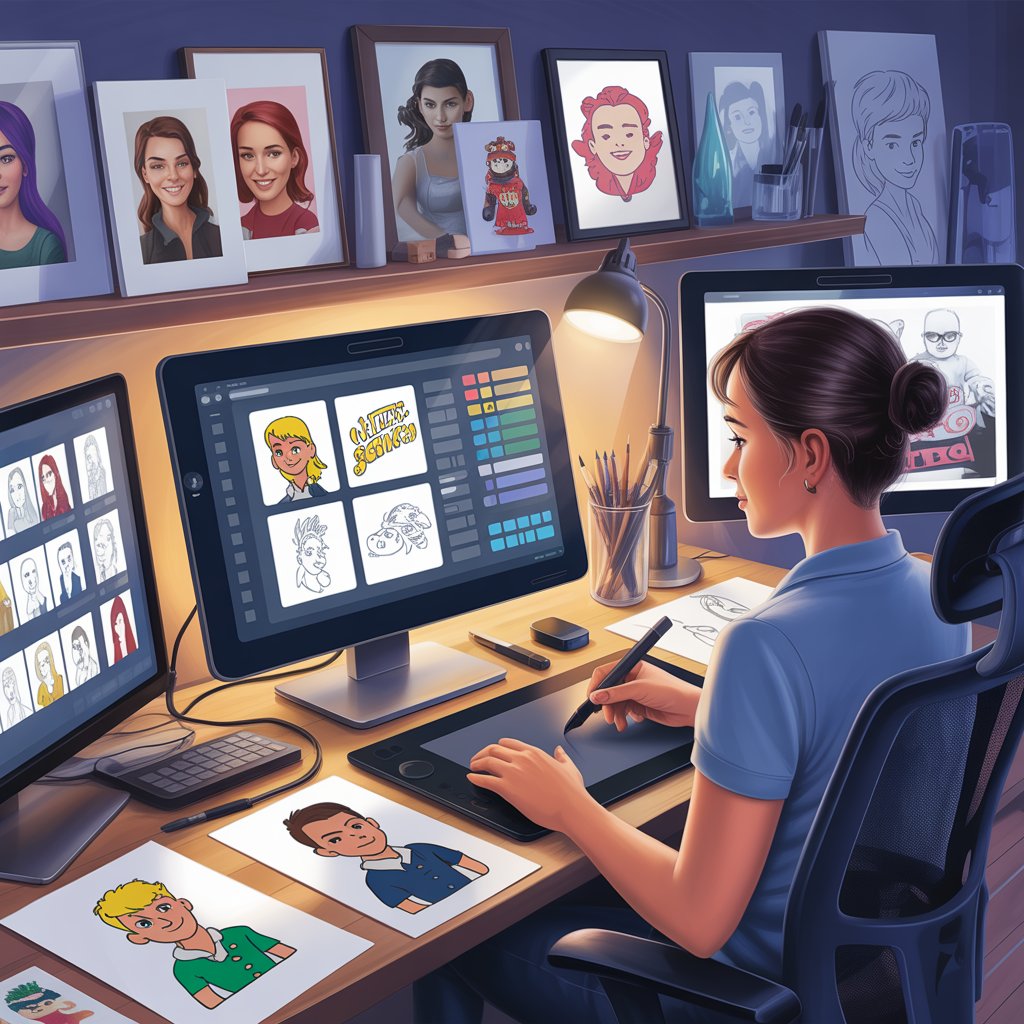
Sign #5: You’re Launching a Mascot, Character, or Original IP
Some brands don’t just sell a product or service. They’re building a world. A mascot. A recurring illustrated character audiences can form a real attachment to over time. A visual universe that grows richer with every new piece of content.
If that’s the direction your brand is heading, a bespoke illustration service isn’t one option among several. It’s the only option that works.
Custom character illustration and bespoke character design are disciplines with a lot more to them than drawing something cute. Your character needs a genuine personality that holds up across every emotional context — happy, frustrated, confused, excited — without breaking consistency. It needs to work at favicon size and billboard size. It needs to translate cleanly to animation if motion is ever on the roadmap. It needs to feel original enough to be legally protectable.
The cost of getting a character wrong at the start is steep. A mascot that feels slightly off — visually inconsistent, tonally weird, hard to reproduce across contexts — becomes something your team stops using. It gets quietly shelved and the investment disappears. Getting it right requires a professional illustration service that treats character development as a strategic project, not a creative exercise.
That means putting in the work before the drawing starts — defining the character’s role, personality range, usage contexts, and visual rules in detail. That groundwork is what separates a mascot people love from one that gets retired after six months.
Drawphics’ character design service is built around exactly this kind of project. The strategic work happens upfront because a great character starts with clarity, not a blank canvas.
Sign #6: Your Paid Ad Performance Has Been Quietly Eroding
If you run paid campaigns — Meta, Google Display, YouTube pre-roll, programmatic — you’ve probably noticed the math getting harder. CPMs up. CTRs down. The same budget producing fewer results than it did two years ago.
Some of that is platform maturity and increased competition. But a significant piece of the problem is creative fatigue. American audiences have been served so many ads for so long that their brains have developed extremely efficient filtering for predictable creative formats. Stock photography, standard product shots, talking heads — these formats still work, but their efficiency erodes every year because the supply of them is essentially infinite.
Illustration for marketing materials punches through that filtering in a way photography increasingly can’t. Illustrated ads look different because most brands don’t invest in original creative at any serious level. The visual craft signals intentionality. The originality signals that someone actually thought about this particular message for this particular audience — and that signal registers, even subconsciously.
Custom digital illustration built for a specific campaign gives you creative assets that nobody else can replicate. Your competitors can run the same stock photos you could run. They cannot run your illustration. In auction-based ad environments, that differentiation has direct effects on quality scores, ad relevance ratings, and ultimately cost per result.
The same logic applies to email campaigns, landing pages, and organic social. Original illustrated creative consistently outperforms stock-based creative in engagement rate benchmarks across every major US-market study in recent years. Drawphics’ ad design service and social media content graphics are built around exactly this problem — creating work that earns the stop rather than disappearing into the scroll.
If your performance has been slipping and you’ve already optimized targeting and copy, the creative is the last piece. It’s usually where the biggest remaining gains are sitting.
Sign #7: You’re Thinking About Your Brand as Something You’re Building, Not Just Something You’re Running
The first six signs are about problems that need fixing. This one is about choosing a different level of ambition.
There’s a mindset shift that happens at a certain stage of business growth — when you stop thinking of your brand as a marketing cost and start thinking of it as an asset you’re building equity in. Because that’s what it actually is. A well-developed custom illustration design system, a distinctive visual world, a library of original characters and branded scenes — these have real, documentable value.
They’re things that can be licensed. Things that get protected by copyright. Things that factor into what a company is worth when it gets acquired. Things that make a franchise possible, that make brand extensions feel natural, that make premium pricing defensible.
Tailored illustration solutions built into your brand’s foundation from the start compound the same way a strong reputation does. Every new asset created in your visual language expands the world. Every time a customer sees your illustration, the recognition deepens. Over years, the distance between your brand and competitors who are still pulling from the same stock library everyone uses grows into a competitive moat that’s genuinely hard to cross.
Working with a creative illustration agency on art commission services through a structured, ongoing relationship isn’t a luxury at this stage. It’s how brands that plan to be around in ten years invest in the infrastructure that gets them there.
If you’re building something you want to last — check out what Drawphics does and meet the team behind the work. Then think about what your brand could look like if the visuals were as serious as everything else.
How to Actually Choose the Right Custom Illustration Service
Knowing you need original illustration is step one. Choosing the right studio or illustrator is where things get more consequential than most people expect.
Look at Actual Illustration Portfolio Examples
Any serious professional illustration service should have a portfolio deep enough to show range across clients, industries, formats, and styles. Illustration portfolio examples from only one industry or only one visual approach tell you something about who you’re dealing with. The best studios have learned to adapt to the brand in front of them, not the other way around.
Understand the Difference Between Illustration Styles
Illustration styles — vector, hand-drawn, and digital art — are not just aesthetic preferences. They carry different emotional signals and serve different functional purposes.
Vector illustration is precise and infinitely scalable. Hand-drawn illustration carries warmth and perceived craft that vector can’t replicate. Custom digital illustration and concept art operate at a level of fidelity suited to cinematic and entertainment-level branding. Watercolor illustration creates a softness that works particularly well for wellness, children’s, and boutique consumer brands — Drawphics offers a dedicated watercolor illustration service for exactly this. And 2D illustration work bridges static storytelling and animation-ready assets.
Knowing which style serves your brand before you brief a studio is the difference between a clear creative brief and a guessing game.
Ask the Right Questions About Illustration Service Pricing
Illustration service pricing should be scoped, documented, and agreed on before any work starts. How many revision rounds are included? What file formats are delivered? Who owns the final work? What happens if the scope changes? These aren’t awkward questions — they’re basic due diligence. Studios that get defensive when asked them are telling you something useful.
Confirm Full Copyright Transfer
When you invest in custom artwork services, you need to own what you paid for. A license to use the work is not ownership. Look for explicit “full copyright transfer upon final payment” language in any agreement. This matters the moment you try to protect, register, license, or sell anything connected to your brand identity.
A Quick Guide to Illustration Styles for US Brands
Vector Illustration — Scalable to any size, reproduces cleanly across print and digital, built for precision. Strong default for tech brands, SaaS, finance, and anyone building a brand system that needs to hold up at every scale from favicon to billboard.
Hand-Drawn Illustration — Communicates craft, warmth, and humanity. Works exceptionally well for food and beverage, artisan products, wellness, children’s content, and any brand where authenticity is a core value. The perceived effort behind hand-drawn work builds a specific kind of trust that other styles can’t fake.
Digital Concept Art — High-fidelity, cinematic illustration suited for entertainment brands, gaming, complex narrative content, and marketing campaigns that need a visual world, not just a visual asset. Drawphics’ digital concept art service lives here.
Character and Scene Illustration — The engine of narrative branding. How brands make audiences care about something beyond a product. Used in explainer video production, children’s books, mascot development, editorial campaigns, and anywhere storytelling is the mechanism. Drawphics’ comic illustration service and activities book work show how this plays out across different formats.
Working With Drawphics
Drawphics is a creative studio focused on the US market, working across illustration, animation, and graphic design. The reason that range matters is practical: strong brands don’t live in a single medium. Illustration feeds animation. Brand system work feeds ad creative. Everything needs to speak a consistent visual language, and a studio that only does one thing tends to create work that only speaks to one part of your brand.
The process at Drawphics starts with genuine discovery — understanding who the brand is, who its audience is, what it needs to communicate, and where the illustration will actually live and do its job. That upfront clarity shapes every creative decision that follows.
Style directions get explored before anything gets locked. Feedback is built into the process from the beginning, not treated as an obstacle at the end. Final files are delivered in the formats that actually work for what the client needs — not just whatever’s easiest to export.
The portfolio is the most honest version of all of this. If you have a project forming, the contact page is where to start a real conversation.
So — Does Your Brand Need This?
If you got through these seven signs and recognized your brand in one of them, you already know the answer. If you saw yourself in three or four of them, it’s overdue.
Custom illustration services aren’t a luxury purchase for brands with big agency budgets. In 2026, with studios like Drawphics making high-quality custom digital illustration and illustrator services online genuinely accessible, the barrier to original work is lower than it’s ever been. The only thing stopping most brands from having visuals that actually belong to them is the decision to stop borrowing and start building.
The brands winning in American markets right now aren’t just the ones with the most spend. They’re the ones with the most distinctive visual identities — the ones that look made, not assembled. That’s what a real bespoke illustration service builds.
If you’re ready to get there, Drawphics is ready to talk.
Frequently Asked Questions
Q1: What does a custom illustration service include?
It includes original artwork — characters, scenes, icons, or full brand visual systems — created exclusively for your brand and fully owned by you upon delivery.
Q2: How is custom illustration different from using stock art?
Stock art is generic and shared across thousands of brands. Custom illustration is yours exclusively — no competitor can ever use the same visuals.
Q3: How long does a custom illustration project typically take?
Single assets take 5–10 business days. Full brand illustration systems take 3–6 weeks. A good studio gives you a documented timeline before work begins.
Q4: Is custom illustration service pricing worth it for smaller US businesses?
Yes. Even modest investment in original illustration separates your brand from stock-dependent competitors, improving engagement, trust, and long-term brand equity.
Q5: Do custom illustrations work across both print and digital formats?
Yes. Professional custom illustrations are delivered in scalable formats — SVG, PNG, PDF, EPS — and perform correctly across websites, print, social media, and merchandise.
Ready to build a brand that actually looks like yours? Explore Drawphics’ illustration services or contact the team directlyto get started.