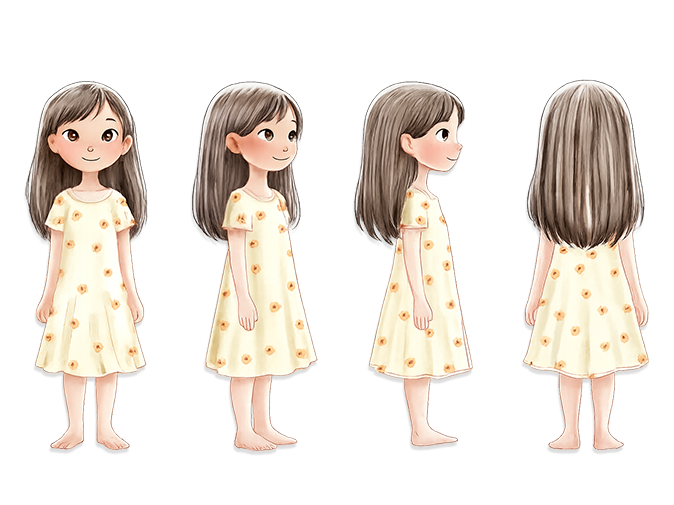
Concept art is the visual groundwork done before the character, environment, or object gets built, and the cost varies depending on the type of assets, the artist’s experience, and how much detail the project needs. Part of the confusion comes when artists price the same work in different ways, by the hour, by the piece, or as a flat project free.
That’s why concept art costs look so different from one quote to the next. It changes with the type of art, how it’s priced, and what it’s being used for. Once you know the type of pricing you are selecting the quote for, the pricing is easy to understand.
This guide breaks down real price ranges by type and project, common concept art pricing models, and what tends to push a quote up or down.
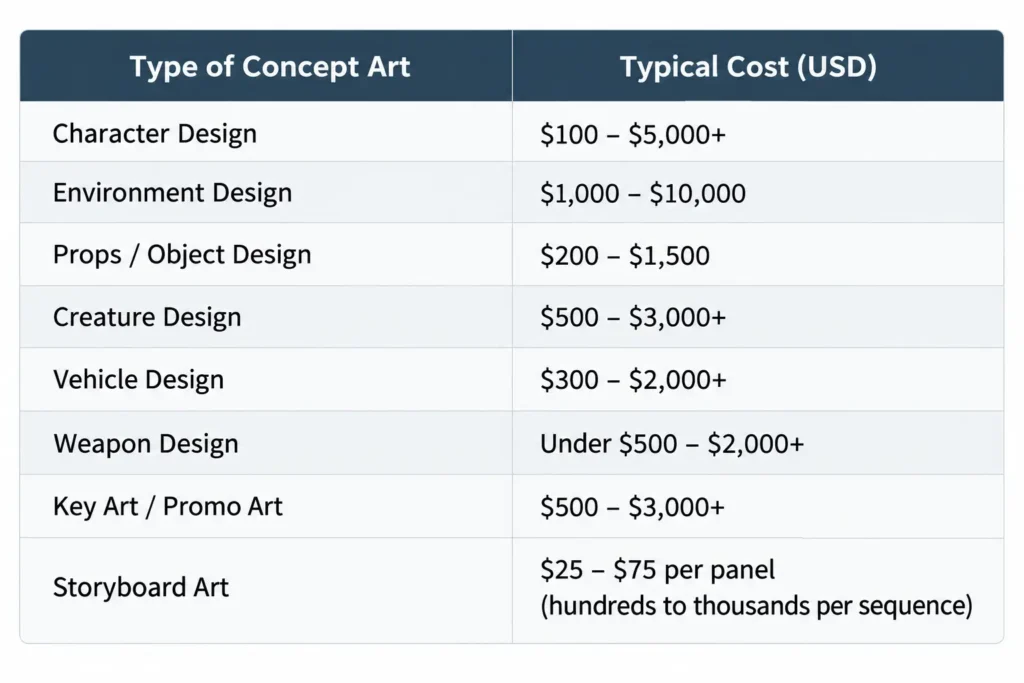
Types of Concept Art & What Each One Costs
Each type of concept art carries its own price range, varying according to its demand, necessity, and marketing industry requirements.
Prices below are typical U.S. market ranges; actual quotes vary by region, artist experience, and current demand, so treat these as a starting point rather than a fixed rate card.
Character Design
A fully rendered character design with detailed costume work for animation reference can reach $1,500 to $5,000 or more. A single figure in simple clothing, sketched loosely, might run $100 to $500.
Studios working on a full cast usually negotiate a package rate instead of paying per figure. Character concept art cost sits on the widest range of any category, since characters vary so much in complexity.
Environment Design
Basic sketches start around $1,000. Large-scale scenes built for a game or film can run $3,000 to $10,000.
Environment concepts price higher on average than character work, because a single scene often contains dozens of smaller decisions: architecture, lighting, foliage, weather, mood.
Props / Object Design
This work takes less time than character or environment design, keeping prices lower, typically $200 to $1,500.
Props and object concepts cover weapons, tools, furniture, and anything smaller a character interacts with.
Creature Design
Simple sketches start near $500. Anything needing multiple reference angles or detailed texture work moves into the $1,500 to $3,000+ range.
Creature concept art demands a strong grasp of anatomy and often invented biology, which pushes its price closer to character design.
Vehicle Design
A basic sketch might cost $300 to $800, while a fully engineered design with interior views can exceed $2,000.
Vehicle concepts, from cars to spacecraft, are priced similarly to props but scale up with mechanical detail.
Weapon Design
Weapon concept art follows the same logic as prop design. A single melee weapon with basic shading is inexpensive, often under $500. Firearms or anything requiring mechanical breakdowns cost more.
Key Art / Promo Art
Prices commonly start at $500 and climb past $3,000 for a fully painted, multi-character piece.
Key art represents an entire project in one image, which makes it one of the more expensive single pieces a studio commissions.
Storyboard Art
Storyboards are billed by panel or sequence rather than as one finished illustration. Simple panels run $25 to $75 each.
A polished sequence for a pitch or production reference can cost several hundred to a few thousand dollars, depending on panel count.
Prices listed are typical U.S. market ranges; rates vary by region and cost of living.
What Is Concept Art?
Concept art is visual development work created before a final character, environment, or object is built. Games, films, animation studios, and illustrated books all use it the same way, to test an idea’s look and feel before committing time to a finished piece.
A concept artist typically works through rough sketches first, then narrows down color, shape, and detail based on feedback. Once a design is locked, it becomes the reference sheet that modelers, animators, and designers build from downstream, which is part of why getting it right early costs less than reworking a finished asset later. Because that process can stop after a single sketch or continue through several detailed passes, concept art cost has almost no fixed baseline.
Studios that offer digital concept art services alongside illustration and animation can usually move a project from rough sketch to final concept without handing it between separate vendors.
What Actually Drives Concept Art Pricing
Two projects requesting the same type of asset can land on very different quotes, and the gap almost always comes down to a handful of factors.
- Art style. Casual or cartoony designs take fewer hours than realistic, cinematic renders.
- Complexity. A simple outfit costs less than layered armor with accessories, since each element adds design decisions.
- Level of detail. Rough internal sketches cost less than a fully rendered piece meant for public use.
- 2D vs. 3D. Concepts that must hold up from multiple angles take longer than a single flat illustration.
- Usage rights. Personal use costs less than commercial rights tied to merchandise or wide release.
- Turnaround time. Rush requests typically add 25 to 100 percent to the base price.
- Revisions. Most quotes include a set number upfront; extra rounds are billed separately.
- Region. A senior artist in the US and an equally skilled artist in a lower cost-of-living region can charge very different rates for near-identical work, which is why two quotes for “the same” character can look nothing alike.
These factors also stack, which is why the cost of concept art for two similar-sounding requests can look completely different. A rushed, highly detailed creature design with commercial rights attached lands far above a relaxed personal sketch, even though both fall under the same category on paper.
Actual cost depends heavily on the individual artist’s experience and portfolio.
Pricing Models — How Artists Charge
Artists and studios settle on one of a few common structures, and knowing which one you’re quoted under makes concept art pricing much easier to compare across offers.
Hourly Rate
Hourly pricing is common for open-ended projects where the scope isn’t fully defined. Rates typically fall between $25 and $150 per hour for freelancers, with senior studio artists charging more.
Flat Rate
A flat rate sets one price for a defined piece of work, agreed on before the artist starts. This suits a single character or environment where the scope is clear from the brief.
Per Piece / Per Concept
Per-piece pricing, sometimes listed as concept art cost per piece, charges a set amount for each design delivered.
It suits projects needing several distinct assets, since the client can budget by multiplying the rate by the number of concepts required.
Packages
Packages bundle a set number of concepts at a discounted combined rate. A small package covering two or three pieces might run $1,000 to $3,000, while a larger bundle of ten or more can move into five figures.
How to Calculate Your Concept Art Budget
The simplest formula is rate multiplied by hours, then multiplied again by the number of specialists involved.
For a solo freelancer on a single character, that might look like a $60 hourly rate across 15 hours, landing around $900.
For a studio handling a full cast plus environments, the same math applies per person, then gets added together across the team. It helps to know how working artists actually price their time before settling on a number.
A 2026 survey of over 400 illustrators found that most price by project fee rather than day rate, with fewer than one in eight billing strictly by the day, a pattern that shows up in concept art commissions too.
The same survey found day rates climbing only modestly with experience. A low quote can reflect a different pricing structure rather than lower skill.
Concept Art Cost by Project Type
Budgeting also depends heavily on which industry the work is headed to. The same character brief can be priced differently depending on how it will be used, and figures below assume US-based rates; regional pricing can run considerably lower or higher.
Video Games
Indie studios might spend $2,000 to $10,000 across a project’s early concept phase, while mid-size and AAA productions can spend tens of thousands across characters, environments, and props combined.
Games remain the biggest driver of concept art demand, and the cost of concept art scales with production size.
Film & TV
Short productions might budget $1,500 to $5,000, while feature-length projects run considerably higher.
Film and television concept work often needs to account for camera angles and continuity across scenes, adding time compared to game concepts built for a single viewpoint.
Animation
Animated projects need concept art that holds up across many frames and poses, not just one static image. This is where the 2D and 3D animation pipeline matters most, since a concept has to survive being redrawn dozens of times.
Shorter animated pieces land in the low thousands; feature-length productions require a much larger concept phase.
Book Covers & Character Illustration
Character concept art cost for an author or small publisher is typically lower than for game or film work, since it usually covers a single figure rather than a full cast. A book cover concept commissioned before final illustration usually falls in the $150 to $800 range
Concept art also plays a role outside games and film, particularly for self-published authors and KDP children’s book projects. .
Advertising & Branding
Brands commissioning concept art for campaigns tend to pay closer to game and film rates, since commercial usage rights and tighter deadlines both add to the price.
Freelancer vs. Studio: What the Price Difference Buys You
A freelance concept artist and a full studio can quote very different numbers for what looks like the same brief.
Freelancers generally cost less because there’s no team overhead, but a single artist has a fixed style and a limit on how much work they can take on.
Studio pricing is usually higher, but it often includes a wider range of styles, backup coverage if an artist is unavailable, and an art director reviewing the work.
A freelancer is usually the more efficient choice for a single sketch. A studio’s ability to split work across several artists justifies the higher rate for a large cast or a tight deadline.
Tips for Working with a Concept Artist
A few practical habits keep concept art projects on budget and on schedule.
- Bring reference images and specific descriptions rather than vague direction. “Give the armor sharper edges and a darker palette” costs less in revisions than “make it more exciting.”
- Agree on the number of included revisions before work starts.
- Set a clear deadline upfront rather than adding rush fees mid-project.
- Ask whether the quote includes commercial usage rights if the art will be used publicly or for merchandise.
- Review portfolio pieces that match your intended style, not just an artist’s strongest overall work.
FAQs
1) How much does concept art cost per piece?
Simple sketches run $100 to $500 per piece, while fully rendered pieces typically fall between $1,000 and $5,000, depending on the type of asset and level of detail. Rates run lower outside the US and Western Europe.
2) How much does concept art cost in video games?
Game studios usually spend anywhere from $2,000 for a small indie concept phase to well over $50,000 for a full AAA production covering characters, environments, and props.
3) How much does it cost to have concept art made for a book cover or character?
Book-related character concept art cost tends to run lower than game or film work, often $150 to $800 for a single cover or character concept, since the project usually needs one finished image rather than a full asset pipeline.
4) Do concept artists charge extra for revisions?
Most quotes include a set number of revisions, usually one to three. Additional rounds are typically billed separately, either hourly or as a flat fee.
5) Is personal or commission character art priced differently from game concept art?
Yes. Personal commissions, including original character work outside a commercial production, are usually priced per piece by individual artists and tend to run lower than studio-quoted game or film concept work.
Get a Real Quote
Concept art cost depends on more variables than any single price list can fully capture. Type of asset, pricing model, industry, region, and artist experience all move the number in different directions. The ranges above give a realistic starting point for budgeting, but the most accurate number comes from sending an artist or studio the actual brief.
Drawphics’ illustrator and concept art services can review project details and put together a clear quote based on what the work actually requires, rather than a generic rate card. Get in touch with the specifics of your project for an exact number.